-
maybe overthinking, but i cant shake the feeling that w bytecode macros you can write a lisp with very few 'special forms' here's a fairly complete sketch of an implementation ofOn twitter.com
if. i think the only special forms would be anything that does name binding (e.g. let, fn, def) #jn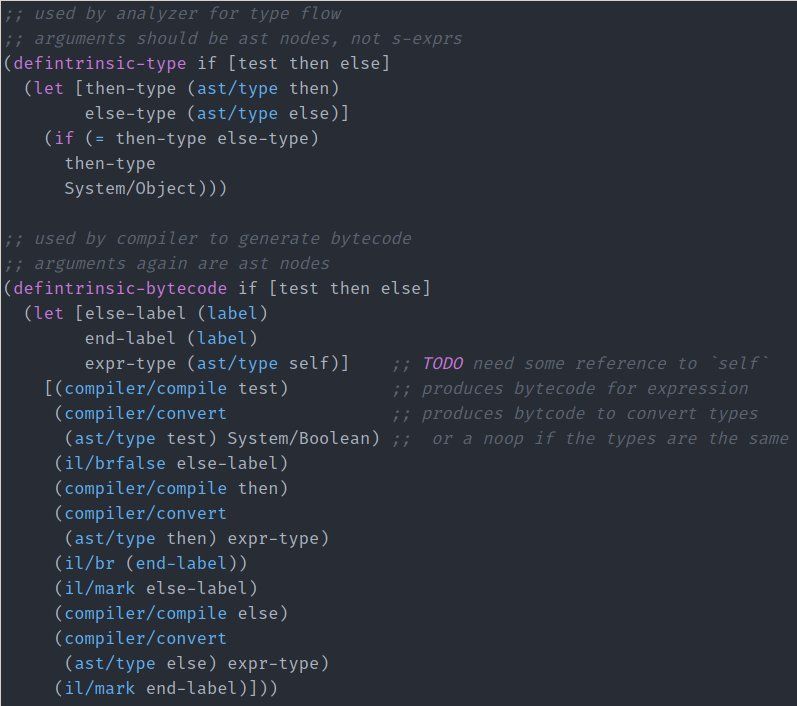
 ♻️ 3 Retweets
❤️ 13 Favorites
Mood +1 🙂
♻️ 3 Retweets
❤️ 13 Favorites
Mood +1 🙂
-
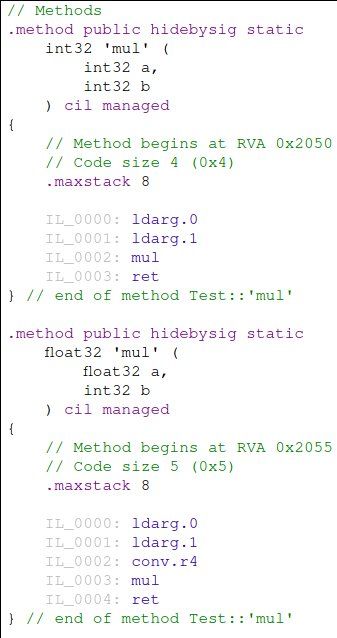
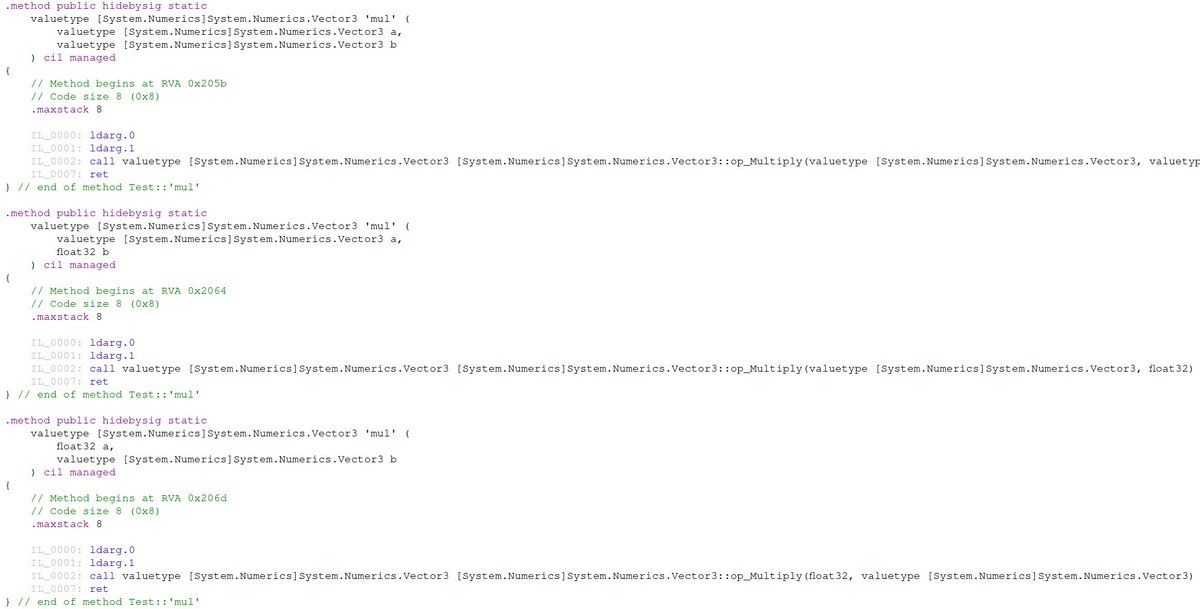
given an expression's arguments you need to answer two questions: what is its type, and what bytecode does it expand to? this gets particularly tricky when implementing 'operators'. bytecode is e.g.Permalink On twitter.com
mulfor primitives, but method invocation for other value types.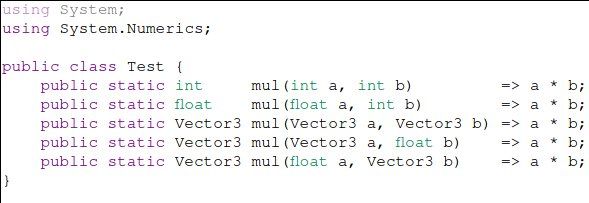
 Mood +1 🙂